
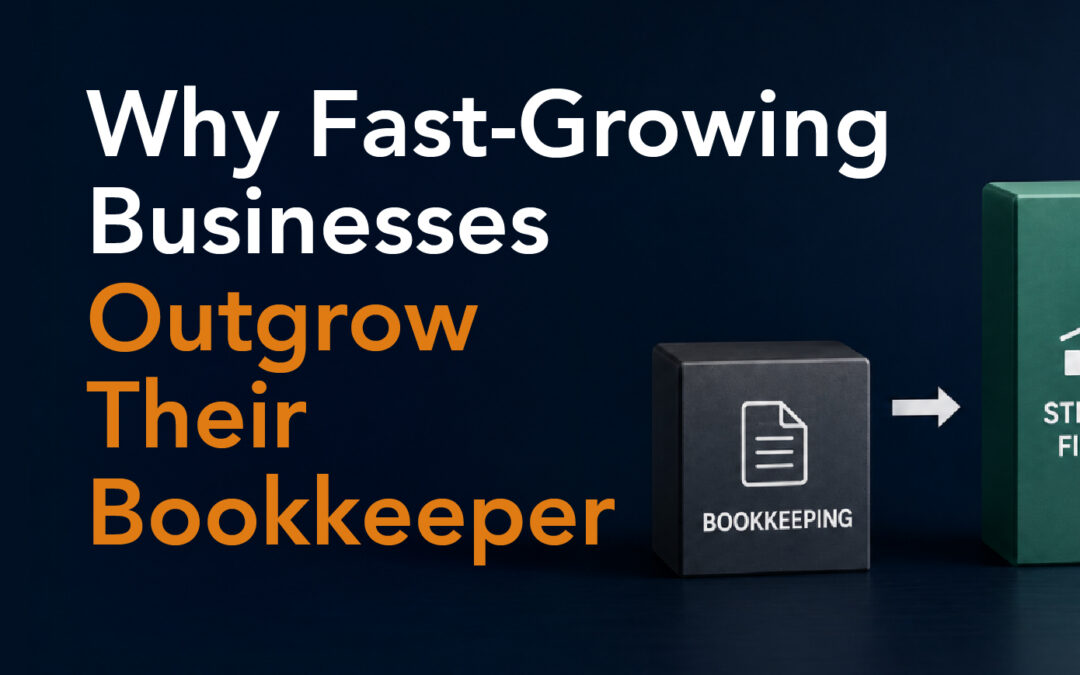
Why Fast-Growing Businesses Outgrow Their Bookkeeper
Published: 24th Jun 26
Why Fast-Growing Businesses Outgrow Their Bookkeeper
The point where bookkeeping alone stops being enough
Bookkeepers play an essential role in every business.
They keep financial records organised. Process transactions. Maintain compliance obligations. And ensure the day-to-day finance administration keeps moving.
But as businesses grow, finance demands begin to change.
Leadership starts needing more than accurate records.
They need visibility, structure, reporting, and financial insight that supports decision-making across the business.
This shift often happens gradually.
At first, the existing finance setup appears to cope.
But over time, month-end reporting becomes slower, reconciliations become harder to maintain, and leadership starts asking questions the finance function struggles to answer quickly.
That’s usually the point where the business begins to outgrow a bookkeeping-only finance structure.
Here are some of the signs this transition is starting to happen.
1. Leadership needs more detailed reporting
As businesses scale, leadership teams usually want deeper financial visibility.
Departmental reporting. Site-level performance. Margin analysis. Cash flow forecasting.
Basic bookkeeping processes are rarely designed to produce this level of operational insight consistently.
2. Month-end becomes increasingly difficult
In many growing businesses, month-end starts taking longer each year.
More transactions. More adjustments. More reconciliations.
Without structured reporting processes and financial controls, finance teams spend increasing amounts of time preparing the numbers rather than reviewing them.
3. Finance becomes too reactive
Bookkeeping is primarily focused on maintaining accurate records and processing transactions.
But growing businesses also need finance support that helps leadership look ahead.
Forecasting. Performance analysis. Operational reporting. Financial planning.
Without these layers, finance remains reactive rather than strategic.
4. Operational finance complexity increases
As businesses grow, finance operations become significantly more complex.
More systems. More departments. More approval workflows. More stakeholders depending on financial information.
What once worked through flexibility and manual effort eventually becomes difficult to manage consistently.
5. Leadership loses confidence in the numbers
When reporting becomes delayed or inconsistent, leadership teams start losing trust in the financial information available to them.
Questions arise around accuracy. Adjustments appear after reports are circulated. Different reports show different figures.
This usually signals that the finance function needs stronger operational structure.
Outgrowing a bookkeeping-only setup isn’t a reflection of poor bookkeeping.
It’s simply a sign that the business has reached a new level of operational complexity.
At that stage, finance needs to evolve beyond transaction processing into a structured accounts function that supports reporting, controls, visibility, and decision-making.
Because as businesses grow, finance needs to do more than maintain records.
It needs to help leadership understand, control, and scale the business with confidence.

Subscribe
Get offers and stay up-to-date
